Discoveries
Twelve things a pig page is not expected to hold
Official footnotes, a newspaper “Pigloo,” a museum pancreas, a deleted legal definition, and a war in which the only casualty was a pig. Every item below was read in a source, not invented to sound surprising.
1. “Other sows” are officially two kinds of animal at once
The England table’s footnote is one sentence: “Other sows are those either being suckled or dry sows kept for further breeding.” That is not a casual gloss. It is the official definition of a whole column, and it covers sows in two different states. [source]
2. The female breeding herd is only 77% of breeding pigs
It is easy to read “female breeding herd” as all the breeding pigs. The official wording will not let you. The herd “accounts for 77% of breeding pigs,” and the same release gives breeding pigs as 322 thousand and the herd as 246 thousand. The other 23% are still official breeding pigs. They are just not in that herd. [source]
3. This site does not add 322 thousand to 3.5 million
Breeding pigs are 322 thousand. Fattening pigs “stood at 3.5 million.” The official total is 3.8 million. If you add the first two figures yourself, you are doing a sum the release does not ask you to do. The official total is the official total. [source]
4. Other sows were the category that did not rise
The official sentence is careful: “Increases were seen across each category within the breeding herd apart from the other sows category.” In the table, other sows are 34,309 in 2026, after 35,060 in 2025. Sows in pig and gilts in pig rose. The footnote category did not. [source]
5. A United Kingdom heading is not an England footnote
AUK 2025 says “Other sows for breeding.” The England 2026 table says “Other sows,” and then footnotes “those either being suckled or dry sows kept for further breeding.” The words are cousins, not copies. This site does not slide the England footnote under the United Kingdom heading. [source] [source]
6. Pigs get an extra official check that cattle, in the same release, do not
For pig and poultry sectors, “an additional data collection exercise is carried out to assure the quality of the pig and poultry data.” Some of the largest farm businesses “are contacted and asked to provide returns for all of their constituent holdings, ensuring higher coverage of a small number of businesses which contribute a large proportion of the pig and poultry populations.” Cattle results, the same release says, are sourced from the Cattle Tracing System. [source]
7. A 1950 newspaper called it a “Pigloo”
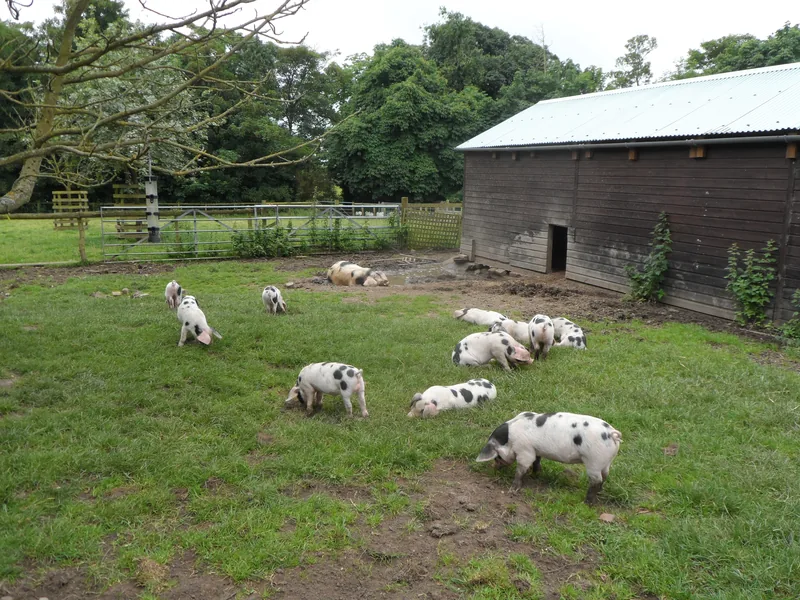
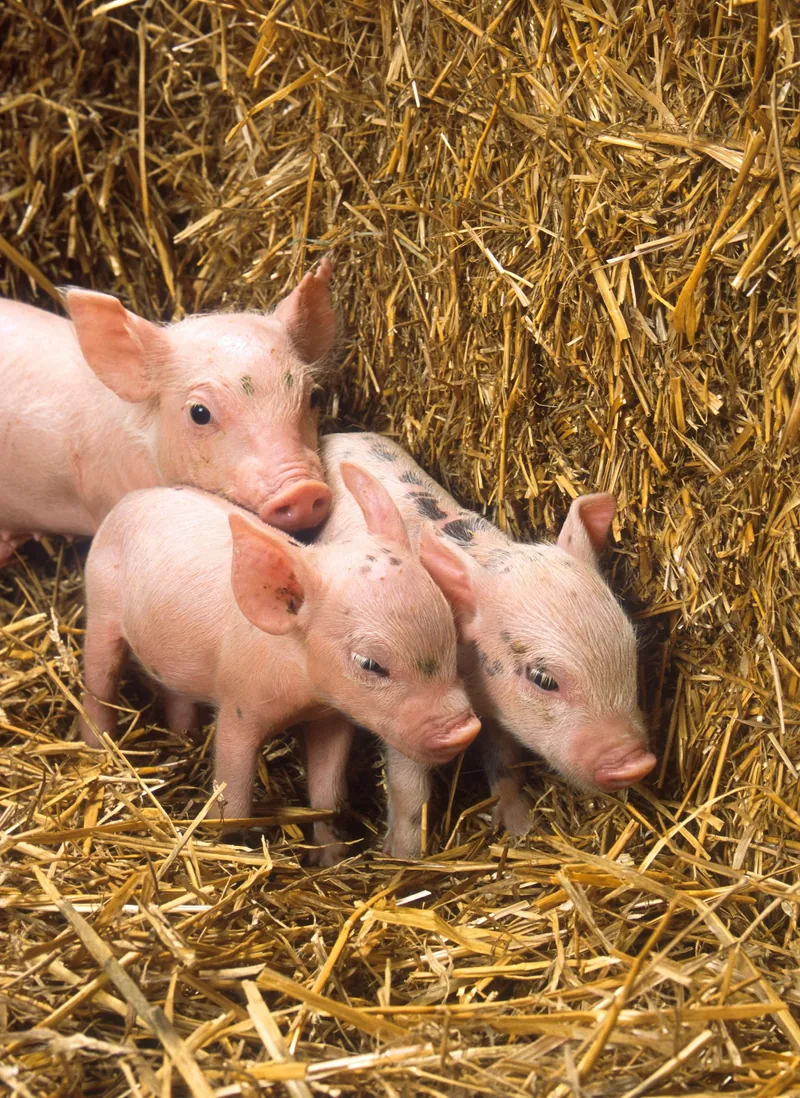
The Science Museum Group’s Daily Herald catalogue records a photograph of 10 January 1950, titled “Happy in a ‘Pigloo’,” “showing an aluminum pig sty at Grove Dale Farm, St. Barr.” The museum keeps that spelling of “aluminum,” and the place-name “St. Barr.” This site does not tidy either of them. [source]
8. For decades, insulin came from ground-up pig pancreases
The Science Museum Group holds a freeze-dried pig pancreas “as used for insulin production.” Banting and Best, the collection note says, isolated insulin in 1921 and “found that pig insulin was similar to human insulin.” “Pig pancreases were ground up in large numbers to extract insulin. Since 1982, insulin has been made from bacteria genetically modified in the laboratory to produce human insulin.” [source]
9. An admiral refused to fight “a squabble about a pig”
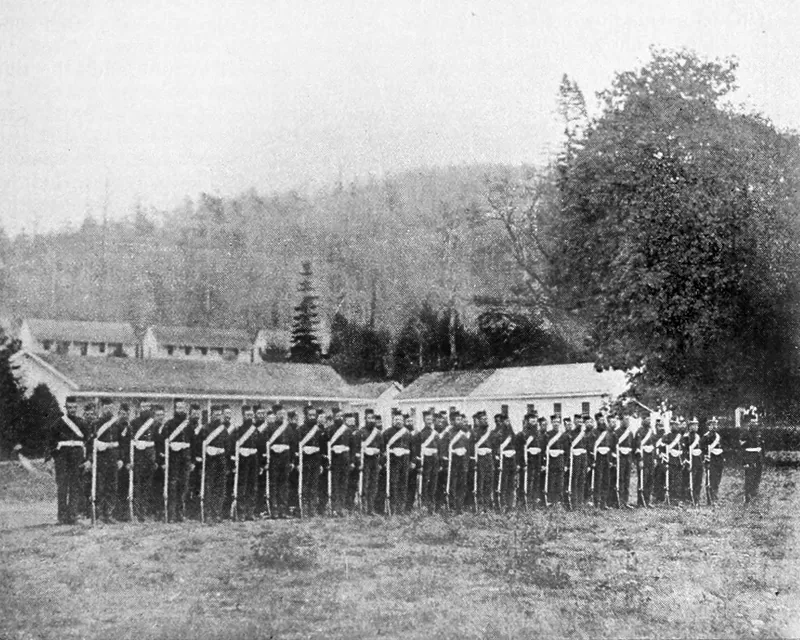
After US troops landed on San Juan Island in 1859, the National Park Service records that Rear Admiral Lambert Baynes “advised Douglas that he would not ‘involve two great nations in a war over a squabble about a pig.’” The FAQ is even blunter: “No fire was ever exchanged between the two nations during the crisis,” and “the only casualty was the pig.” [source] [source]
10. The man behind Robert’s Rules of Order dug a gun pit over that pig
The official park history says eight 32-pounder naval guns were taken from the USS Massachusetts “to be emplaced in a redoubt excavated under the direction of Lieutenant Henry M. Robert (future author of Robert’s Rules of Order).” A book of meeting procedure and a gun position on a disputed island share an author. [source]
11. The rangers still do not know who ate the pig
The Park Service FAQ answers a question “we’re asked everyday during the summer months”: “We do not know who ate the pig.” It also says the name “Pig War” “was coined in jest many years after the incident.” The famous name is later, unofficial wording. The official fact underneath it is that the pig’s fate, after it was shot, is not recorded there. [source]
12. In 2001 an England order deleted the definition of “swill”
SI 2001/1704, made on 3 May 2001 and in force on 24 May 2001, provided that “the definition of ‘swill’ shall be deleted,” and forbade the feeding of certain catering waste to livestock. A later official report records that in 2001, “74 premises in the UK were licensed to process swill and 93 (including all the 74 licensed processors) were licensed to feed it,” and that in 2000 “around 82,000 pigs in GB, about 1.4% of the total, were fed swill.” [source] [source]
Two longer stories would not fit in a card. The Tamworth Two is a British news story whose official BBC wordings do not agree about how long the pigs were on the run. The Pig War is the official park history in full.
Keep exploring
Enjoyed the sty?
No pop-ups. No intrusive advertising. Just interesting stuff. A little support helps the next farmyard site get built.